One of the snacks often seen in parks and garages in the South Western part of Nigeria is Aadun. It is a savory snack of Yoruba origin. It is often wrapped in moi-moi leaves (Thaumatococcus danielli) or white cellophanes. Aadun is locally made from roasted dry corn, palm oil, salt and grinded pepper. It is powdery and can be of two types; the pure corn flour and a mixture of corn flour with palm oil. Aadun has been competing with other small snacks and sausages since ages past.
Aadun is prepared by roasting dry corn (desirable amount) in a pan. The roasted corn is then grinded to powdery form (flour). Ingredients added to the flour are salt and chilli powder. The ingredients are mixed together and kneaded with the hands thoroughly until they have a perfect blend. These preparation forms the first type of aadun; the pure form. In the second type of aadun preparation, palm oil is added which then forms a mold. It is then cut into shapes and wrapped with leaves.
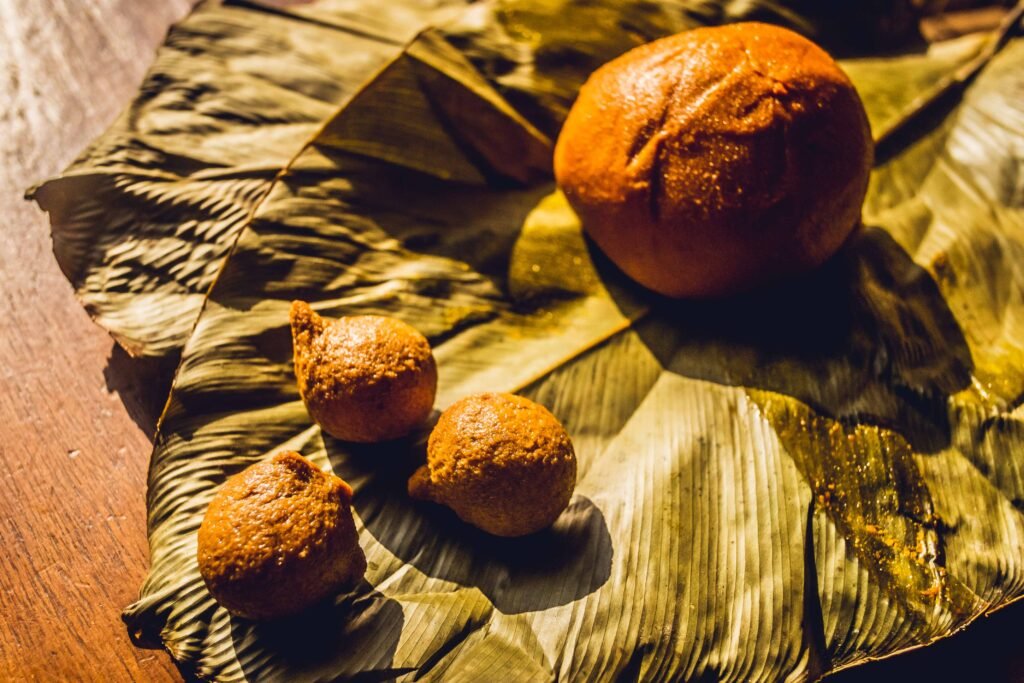
The palm oil makes it look rich and fine. Aadun is the Yoruba word for ‘sweetness’ even though the snack itself has a savory taste. Aadun is a street snack served during naming and wedding ceremonies as an appetizer. It is so tasty and rich in crude fibre, calorie, iron, magnesium and phosphorus. It has nutritional benefits like reducing the risks of diseases like Alzheimer’s disease, cataract, cancer, cognitive impairment, muscular degeneration, high cholesterol, arterial thrombosis, hypertension and vitamin A deficiency. If for these benefits you have to taste it, make sure you get a glass of water to settle down the fibres